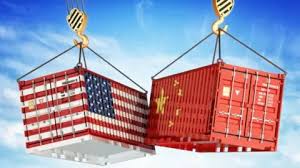

Economic security is the backbone of a strong and independent nation. America’s ability to grow, build, and innovate depends on resilient domestic supply chains that support every sector of our economy—from agriculture and manufacturing to energy, technology, and construction.
Common Sense America promotes policies that strengthen U.S.-based production of critical minerals, agricultural crops, energy resources, and the materials used to build our communities and vital infrastructure, including steel, cement, timber, semiconductors, fertilizers, and advanced manufacturing components. When America produces more at home, we reduce dependence on foreign adversaries, stabilize prices for families, and create good-paying jobs in communities across the country.
Yet today, flawed policies and regulatory loopholes too often undermine American producers. Overlapping regulations, outdated permitting processes, and uneven enforcement have placed unnecessary burdens on farmers, ranchers, manufacturers, and small businesses—making it harder to compete and easier for foreign competitors to dominate key markets.
Common Sense America supports closing these loopholes and modernizing our regulatory framework so it rewards responsible domestic production instead of outsourcing, offshoring, or ideological obstruction. Protecting American workers and industries requires rules that are clear, fair, and grounded in economic reality—not policies that weaken supply chains or shift production overseas.
A secure economy requires long-term thinking and common-sense leadership. By investing in domestic supply chains, safeguarding critical industries, and aligning economic policy with national security priorities, America can ensure lasting prosperity for future generations.
Common Sense America advocates for balanced solutions that strengthen self-reliance, support innovation, and allow American agriculture and industry to thrive. Economic security isn’t just about growth—it’s about resilience, independence, and ensuring the United States remains strong in an increasingly competitive world.
Did You Know?
- China controls roughly 85–90% of the world’s rare earth element processing, materials that are essential for U.S. military systems including fighter jets, missile guidance systems, radar, night-vision equipment, and secure communications.
- China is one of the largest buyers of U.S. soybeans, leaving American farmers vulnerable to trade disruptions, market manipulation, and geopolitical tensions that can directly impact crop prices and rural economies.
- U.S. cement production declined by 4% in 2024, while imports accounted for 22% of all cement used nationwide, increasing America’s reliance on foreign suppliers for a critical infrastructure material.
- American farmers depend on imported fertilizers and agricultural inputs, leaving domestic food production exposed to global supply disruptions and price volatility.
- Outdated permitting and regulatory delays can take 7–10 years or longer to approve new domestic mining, energy, or infrastructure projects—pushing investment and production overseas instead of creating jobs at home.
- The U.S. has lost millions of manufacturing jobs over the past several decades, weakening supply chains for steel, semiconductors, construction materials, and essential industrial components.
- Foreign adversaries control large portions of global processing capacity for materials essential to infrastructure, energy systems, and national defense—giving them leverage over American markets.
- Supply chain disruptions raise costs for American families, increasing prices for food, housing, fuel, and everyday goods when domestic production is constrained.